TDS on Property Purchase India 2026: Section 393(1) (Old 194-IA) Step-by-Step Guide

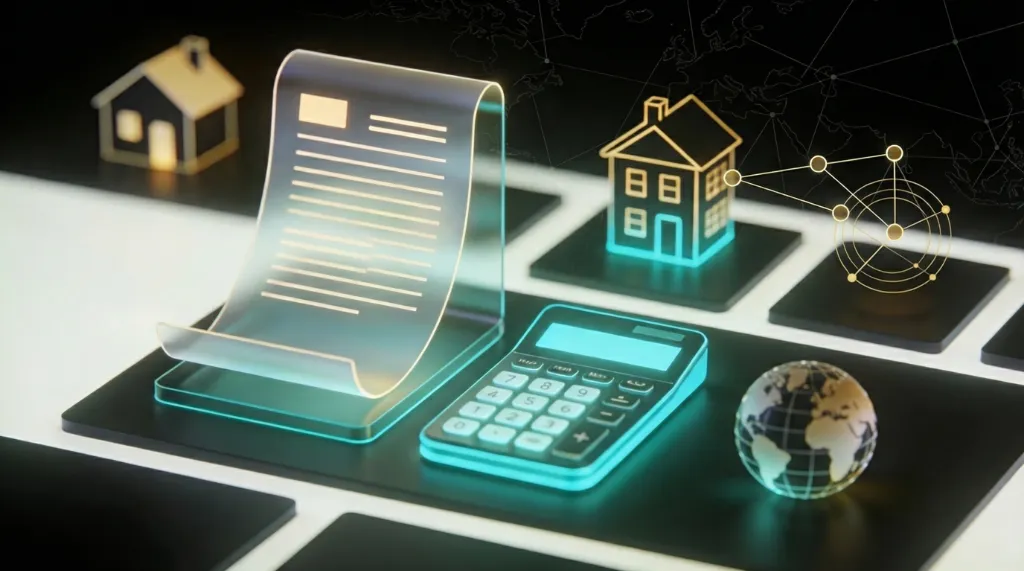
It is the most common "expensive mistake" for first-time homebuyers in the ₹50L+ segment.
You negotiated the price. You paid the stamp duty. You signed the registry. Six months later, you get a notice from the Income Tax Department demanding the TDS you never deducted plus interest, and as much as 20% of the deal value if the seller's PAN was not valid.
Why? Because you thought the "TDS clause" in the sale agreement was the builder's job. It is not. It is yours.
Under Section 393(1) of the Income-tax Act, 2025 (old Section 194-IA), the responsibility to deduct tax rests 100% with the buyer, not the seller. Here is how to navigate this without getting burnt in 2026.
This guide is for a resident seller. If the seller is an NRI, it does not apply: there is no ₹50 lakh threshold, the rate is not 1%, and TDS runs under Section 393(2) (old Section 195) at a much higher rate. See the TDS guide for NRI property sales and what changed for buyers from 1 October 2026.
Tax rates, sections and forms checked on 2 November 2026 against the Income-tax Act, 2025. General information, not tax advice: confirm your case with a CA.
The Rule: 1% Deduction on Deals of ₹50 Lakhs or More
If the "Consideration Value" (or Stamp Duty Value, whichever is higher) of the property is ₹50,00,000 or more, you must deduct 1% from the payment to the seller and deposit it with the government.
- Example: Deal Value = ₹80 Lakhs.
- You Pay Seller: ₹79.20 Lakhs.
- You Deposit to Gov: ₹80,000 (via Form 141, old Form 26QB).
Two Details Buyers Miss
- It's NOT Just "Sale Price" Anymore: Under Section 402(9), the consideration includes "incidental charges" like Club Membership, Car Parking fee, Electricity fee, and Maintenance advance. If your flat is ₹48L but parking+club takes it to ₹52L, TDS applies on the full ₹52L.
- Aggregate Value Rule: If there are multiple buyers (e.g., Husband + Wife) buying a ₹80L flat (₹40L share each), you CANNOT say "my share is under ₹50L". TDS applies on the total property value.
The "Active PAN" Trap (The 20% Nightmare)
This is where buyers get destroyed. Section 397(2) (old Section 206AA) requires a valid PAN: if the seller does not provide one, the TDS rate jumps from 1% to 20%. An Inoperative PAN (not linked with Aadhaar) has been treated the same way, so confirm the current position with a CA.
The Scenario: You pay the builder/seller 99% (₹79.2L) and deduct 1% (₹80k). When you go to file Form 141, the portal rejects the seller's PAN as "Inoperative". Liability: You can be liable for the remaining 19% (₹15.2 Lakhs). If you already paid the seller, good luck getting that money back.
Pro Tip: ALWAYS verify the seller's PAN status on the Income Tax portal before releasing the first cheque.
Process: How to File Form 141
You do not need a TAN (Tax Deduction Account Number). Your PAN is sufficient.
- Deduct: Keep 1% back from every installment (for under-construction) or the final payment (for resale).
- Deposit: Go to the Income Tax Portal > e-Pay Tax. Select Form 141.
- Timeline: You must deposit the TDS within 30 days from the end of the month in which deduction was made.
- Deducted on Sep 15th? Deadline is Oct 30th.
- Certificate: Generate Form 132 (old Form 16B) and give it to the seller as proof.
Penalties: Why You Can't "Fix It Later"
The IT Department is ruthless with Section 393(1) because it tracks black money.
- Late Fee (Sec 427, old 234E): ₹200 per day of delay, capped at the tax deductible.
- Interest: 1% - 1.5% per month on the unpaid tax.
- Penalty (Sec 461, old 271H): ₹10,000 to ₹1 Lakh for non-compliance.
The Asymmetric Risk: The seller gets their money and leaves. The tax department comes after you, not the seller. You are treated as in default, with interest, and if you deducted the tax but didn't deposit it, it becomes a charge on all your assets.
Summary Checklist for 2026 Buyers
- Check Total Value: Add parking, club, and maintenance. Is it ₹50L or more?
- Verify Seller PAN: Is it linked to Aadhaar and 'Active'?
- Deduct Per Payments: Don't wait for the end. Deduct 1% from every installment.
- File Form 141: Within 30 days from the end of the month of deduction.
Buying in a new market? Government rules vary by state, but TDS is Central. Whether you buy in Goa or Dehradun, this 1% rule follows you everywhere.
Read Next

The Cash Component Trap: Why Black Money Deals Hurt the Buyer Most (2026)
Sellers love cash. For a buyer, paying it is financial suicide. We explain the Capital Gains disaster and the seller's 100% penalty (Section 185, old 269SS).

Maximum LTV for Home Loans India 2026: RBI Rules + Bank Comparison
RBI LTV ratio limits for home loans in India 2026. Compare maximum LTV across SBI, HDFC, ICICI for primary, second homes, and vacation properties in Goa, Dehradun.
Shaktipeeth Expressway Land Compensation: Sindhudurg Rates
No per-acre Shaktipeeth rate is published, but the formula is. Banda and Talkat worked out per guntha, the Highways Act route, tax, papers and NRI steps.